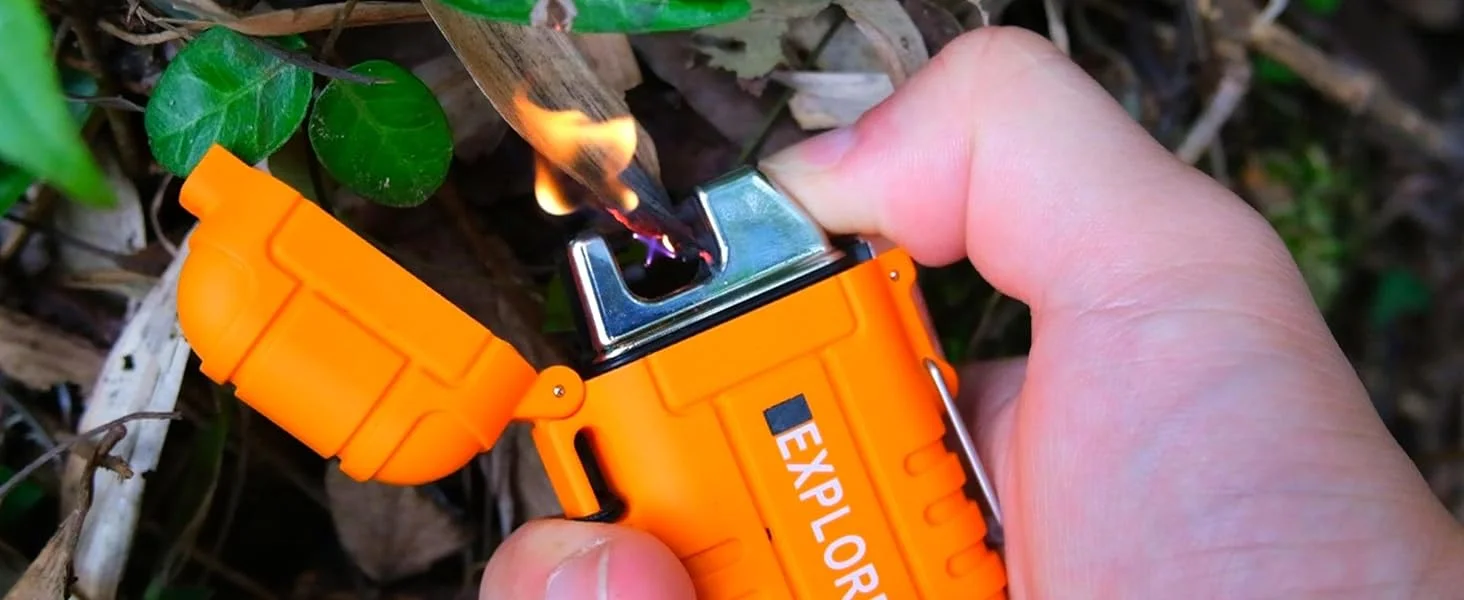
A reliable lighter can be a small but important part of an outdoor kit. Campers use lighters to start stoves, lanterns, fire starters, and emergency fires, while hikers may want a compact backup for wet or windy conditions. Ordinary pocket lighters can struggle when gusts cool the flame or blow it out, so the best windproof lighters are designed around stronger ignition systems, protected flames, or flameless arcs. The right choice depends on the weather you expect, how often you will use it, and whether you prefer carrying fuel or charging a battery.
What Makes a Lighter Windproof
“Windproof” does not always mean that a lighter will work in every storm. It usually means the ignition system is better able to resist airflow than a conventional soft-flame lighter. Torch models use a concentrated blue flame, often with a narrow burner that remains stable in moderate wind. A double torch design uses two jets and can spread heat across a larger area, which is helpful when lighting a fire starter or stove from a less convenient angle. Plasma and arc lighters create an electrical arc instead of a flame, so they cannot be blown out in the usual way, although heavy rain can still interrupt operation.
A protective housing also matters. A deep burner guard can shield a torch flame, while a sliding cover can protect an electric arc from pocket debris and accidental activation. Look for a lighter that has a firm lid, a clear ignition control, and enough grip to use with cold or wet hands. Wind resistance should be considered alongside water resistance, because a lighter that performs well in dry gusts may fail after being soaked.
Best Windproof Lighter Types for Outdoor Activities
Refillable torch lighters
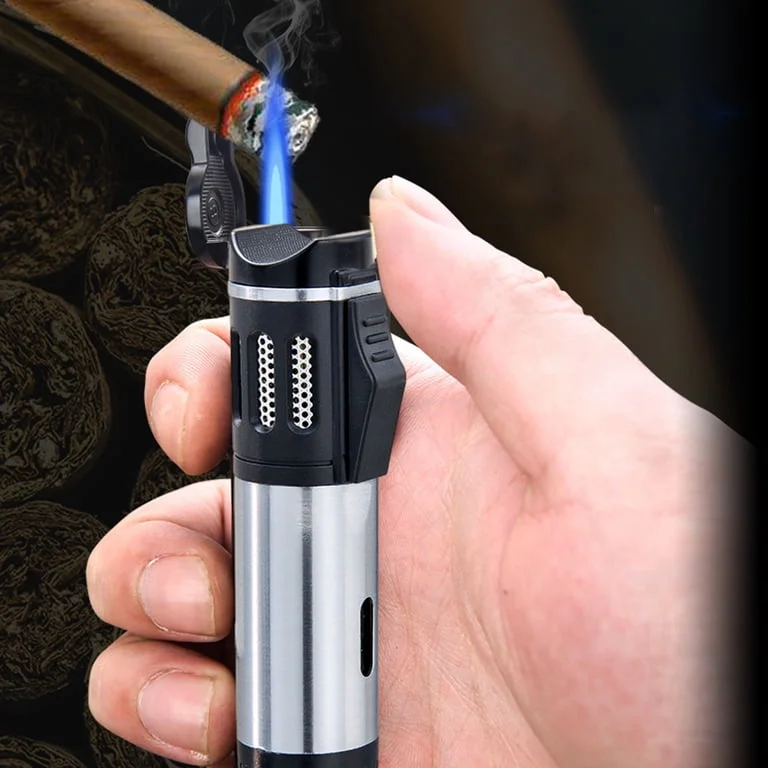
Refillable butane torch lighters are a versatile choice for camping and general outdoor use. Their narrow flame reaches high temperatures quickly, making it easier to light fire starters, stove fuel, and thicker materials than with a standard soft flame. A single torch is usually compact and fuel-efficient, while a double torch model offers a broader heating area but may consume fuel more quickly. Choose one with an adjustable flame, a visible fuel window, and a burner shield that keeps fingers away from the heat.
The main advantages are fast ignition, strong heat, and straightforward refilling. The drawbacks are that butane can be harder to vaporize in very cold conditions, and the flame still requires caution around dry vegetation. Refillable torch lighters are best stored upright with the fuel control locked or protected when they are packed in a bag.
Electric arc lighters
Electric arc lighters are flameless and rechargeable, making them appealing for hikers who want to avoid carrying a fuel canister. They generate one or more electrical arcs between electrodes, which can ignite paper, tinder, and some fire starters. Their performance is less affected by ordinary wind than an open flame, and many models include a hinged cover or safety switch. A USB charging port is convenient when a power bank is already part of your kit.
Arc lighters have practical limitations. They may not reach across a large gap as easily as a torch, and damp tinder can be difficult to ignite. Battery capacity also decreases in cold weather, so they are better as a primary lighter for day hikes, campsites, and moderate conditions than as the only ignition source for remote trips. Keep the electrodes clean and carry a backup if fire is essential.
Wick and fuel lighters
An Oil Lighter with a wick and fuel reservoir can be durable and reusable, especially when protected inside a case. Its broad flame is useful for lighting candles and some camp materials, but it is generally more vulnerable to wind than a torch or arc design. Fuel evaporation is another consideration: even when the lighter is not used, the reservoir may need topping up after storage. This type suits users who value a traditional mechanism and easy field maintenance, provided it is kept away from leaking fuel and flammable gear.
Disposable lighters
Disposable lighters are inexpensive, lightweight, and convenient as backups. A Disposable model can be useful in an emergency kit or on a short trip where refilling equipment is unnecessary. However, standard disposable lighters are usually less wind-resistant than torch or arc options, and their fuel level is not always easy to judge. If you choose one, protect it from heat, inspect it before use, and consider carrying two separate ignition sources rather than relying on a single lighter.
Fuel, Battery Life, and Refill Considerations
Fuel choice affects both reliability and maintenance. Butane torch lighters need high-quality refined fuel and a compatible refill nozzle. Purge residual air before refilling according to the manufacturer’s instructions, then allow the lighter to settle before ignition. Do not refill near a flame, inside a tent, or in an enclosed vehicle. A fuel gauge is useful, but it should not replace a pre-trip test because pressure and burner condition also affect performance.
Recommended product
Use these catalog picks as a shortlist for best windproof lighters for camping, hiking, and outdoor use. Compare measurements, materials, and return terms side by side instead of buying from a photo alone.
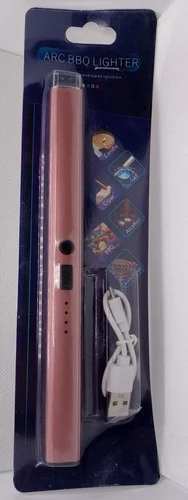

Rechargeable arc lighters remove fuel handling from the packing list, but they require charging discipline. Check how many ignition cycles the battery supports, how long a full charge takes, and whether the charging port has a cover. Cold temperatures can reduce battery performance, so keep the lighter insulated inside a pocket or dry bag when conditions are freezing. For longer trips, a small power bank may be worthwhile, though it adds weight and creates another item that must stay dry.
If you are comparing a catalog of lighters 24 or more options, weigh each model by its ignition type, weather protection, fuel or battery demands, size, and safety controls rather than by appearance alone. A torch may offer better heat but need refills; an arc lighter may be cleaner and easier to pack but less effective on damp tinder; and a Disposable lighter may be the cheapest backup while providing the least wind resistance. These pros and cons are more useful than treating every windproof label as equivalent.
Safety Features to Look For
A child-resistant control or two-step ignition helps prevent accidental activation in a pack. A locking switch, covered trigger, and automatic shutoff are especially valuable for torch and arc designs. The lighter should have a stable base or a shape that is easy to hold without placing fingers above the burner. For models with an exposed flame, a flame-adjustment control should be recessed or protected from being moved unintentionally.
Store lighters away from direct sunlight, cooking surfaces, and other heat sources. Never leave a fuel lighter inside a hot car or sealed container exposed to high temperatures. Keep ignition devices separate from loose fuel, batteries, and easily ignited clothing. In wet conditions, place the lighter in a waterproof pouch, but allow it to cool before sealing it away. A Cigarette Case may protect a traditional lighter from scratches and pocket debris, but it is not automatically a waterproof or heatproof storage solution.
Brand familiarity can help with replacement parts and instructions, but it should not replace checking the actual specifications. A Newport product, for example, should still be assessed for its ignition type, fuel capacity, safety design, and intended use rather than chosen solely by name. Confirm that replacement fuel, charging cables, and seals are readily available before taking a specialized lighter on a long trip.
How to Choose the Right Outdoor Lighter
For frequent camping, a refillable torch is often the most practical all-rounder because it provides concentrated heat and can be reused. Choose a double torch when you regularly light thicker tinder or want a wider heating area, but accept the greater fuel consumption. For day hikes and travel where fuel handling is inconvenient, an arc lighter is a clean, rechargeable option, particularly when paired with a waterproof pouch and backup ignition source.
For emergency kits, simplicity usually matters more than advanced features. A protected torch or Disposable lighter can serve as a low-cost backup, while a second ignition method adds resilience if one becomes wet or runs out of fuel. For cold-weather trips, test the lighter outdoors before departure and keep spare fuel or a charged device close to body heat. For wet environments, prioritize a sealed cover, a secure ignition lock, and storage that keeps water away from the burner or electrodes.
The best windproof lighter is therefore the one that matches your activity rather than the one with the most dramatic specification. Consider the expected wind, rain, temperature, trip duration, and available charging or refilling options. Test the lighter with the materials you actually carry, pack it where it can be reached without unpacking your entire bag, and bring a backup whenever fire is important for warmth, cooking, or emergency signaling.
FAQ: Best Windproof Lighters for Camping, Hiking, and Outdoor Use
What is the best type of windproof lighter for camping and hiking?+
Arc and electric lighters work well in windy conditions because they use an electric plasma arc instead of an exposed flame. Butane torch lighters are another strong option when you need a concentrated flame for lighting stoves, fire starters, or candles. Choose based on whether you prefer rechargeable convenience or refillable fuel and faster ignition.
Are electric arc lighters good for outdoor use?+
Electric arc lighters are useful for camping and hiking because they are wind-resistant, rechargeable, and do not require liquid fuel. Their main limitations are battery life and performance in wet conditions, so look for a water-resistant model with a charge indicator and bring a backup ignition method for longer trips.
How do I choose a fuel for a windproof camping lighter?+
For refillable torch lighters, use the fuel type specified by the manufacturer and choose a model with an adjustable flame for different outdoor tasks. Butane is compact and widely available, while disposable or liquid-fuel options may suit longer trips if you can carry spare fuel safely. Check fuel capacity and refill access before buying.
What safety features should an outdoor windproof lighter have?+
Look for a safety lock, protective cap or sliding cover, accidental-ignition prevention, and a sturdy grip that is easy to operate with cold hands. A fuel-level window or battery indicator is also helpful, as is a lanyard or attachment point to prevent loss. Keep any lighter away from children, loose fuel, and high heat when not in use.
What should I look for when buying a windproof lighter for hiking?+
Prioritize a compact, lightweight design with reliable ignition, weather resistance, and controls that are easy to use outdoors. Consider whether you need a single flame, dual arc, or torch flame, then compare runtime, refill or charging options, and included safety features. For remote trips, carry a backup lighter or waterproof matches rather than relying on one device.